 English
 Español (Spanish)

ORPHANED BY FEMIMNICIDE:
A Historical Debt to Children in Puerto Rico
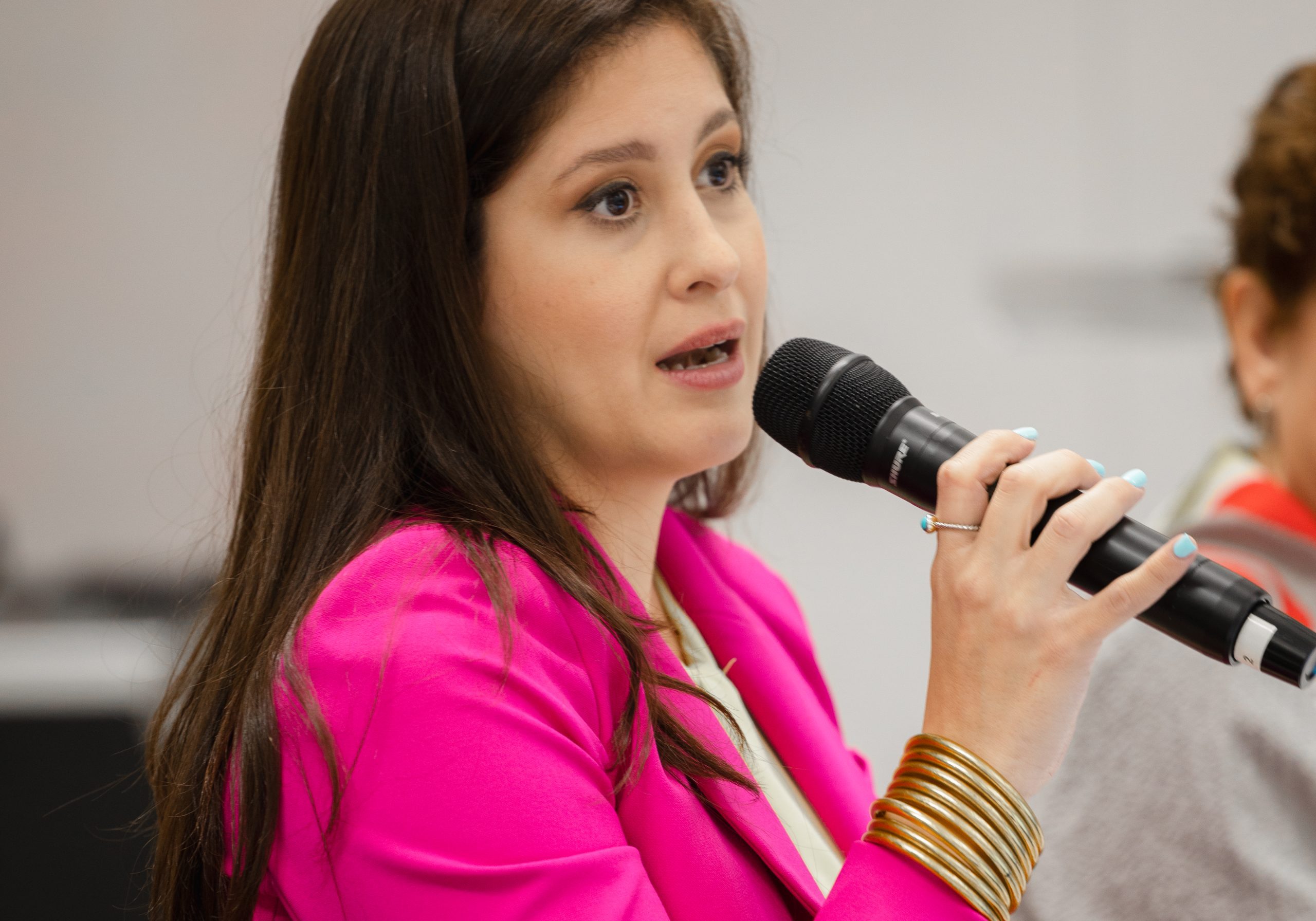
Photo: Stephanie Figueroa Figueroa (she/her), Executive Director, Observatorio de Equidad de Género en Puerto Rico
In a country where gender-based violence has claimed hundreds of lives, there is a silent victim that remains invisible: children, adolescents, and youth who survive the feminicide of their mothers. This was revealed in the most recent report by the Observatorio de Equidad de Género, a non-profit organization dedicated to making visible and documenting the multiple layers of violence faced by women, young girls, and trans people in Puerto Rico.
This study, co-led by Stephanie Figueroa and Deborah Upegui, executive director and analyst at the Observatorio, respectively, not only highlights the magnitude of the feminicide problem on the island but also challenges the State’s lack of responsibility for the orphans left behind by these crimes. Since our founding in 2019, following Hurricanes Irma and María, we at the Observatorio have been pioneers in the monthly monitoring of feminicides, attempted feminicides, disappearances, and hate crimes.
“We noticed that in Puerto Rico, no data is collected on minors who survive the feminicide of their mothers, and that the State has not assumed any reparative responsibility toward these communities,” warned Figueroa during the presentation of the report at the 2025 Annual Meeting: Feminist Research for Systemic Change, held last August.
From 2019 to the present, we have recorded 455 women victims of feminicide, of whom 125 were mothers and at least 83 had minor children. This reveals that at least 156 minors have been left in orphaned status, with no official register or protocol in place for comprehensive care.
Among the data collected by the Observatorio, we found that in 42 cases of intimate partner feminicides legally processed in the country, 30% of the children of the victims were present at the crime scene, and 10% of them were the ones who discovered their mothers’ bodies. Despite the severity of the trauma they endure, the State lacks a robust and universal system to register and support these children. Currently, there are no qualitative studies that capture the voices of the children who survive this violence.
The report also revealed that there is no reparatory public policy in Puerto Rico for indirect victims of feminicide, unlike in countries such as Uruguay, Argentina, Chile, Colombia, and Ecuador where legal and economic mechanisms exist to attend to these situations.
The absence of an intersectional approach and specific protocols, combined with the lack of data and public policy to support these communities, leaves hundreds of minors unprotected on multiple levels: emotional, economic, educational, and social. At the same time, it perpetuates a cycle of abandonment and revictimization.
Given these systemic shortcomings, the Observatorio has launched a new research phase titled “Silenced Voices: Repercussions of the Violent Deaths of Mothers in Children and Youth in Puerto Rico.” This study will combine quantitative and qualitative methods to document not only statistics, but also life stories, psychosocial impacts, and the long-term well-being of affected children. This new phase aims to inform the creation of trauma-sensitive services, informed care protocols, and reparative public policies that fully acknowledge and address the consequences of feminicide in children.
The Observatorio de Equidad de Género’s report is a call for the State to assume its responsibility, given the historical debt we owe to children orphaned by feminicide.
Presentation: Stephanie Figueroa during our 2025 Assembly
Stephanie Figueroa’s presentation begins at minute 47:49. The video has English subtitles.
The Fundación de Mujeres en Puerto Rico supported the Observatorio de Equidad de Género in this research aimed at promoting public policies to address the needs of children orphaned by the feminicide of their mothers on the island. Through our Economic Justice Fund, we support the sustainability of organizations that serve, accompany, and organize women, young girls, and LGBTQ+ communities by providing flexible, operational grants. This fund allows them to invest in their administrative infrastructure, strengthen their organizational base, and carry out their work with greater autonomy, recognizing that supporting the structure is also part of advancing justice.